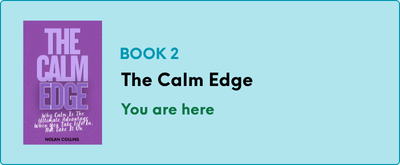
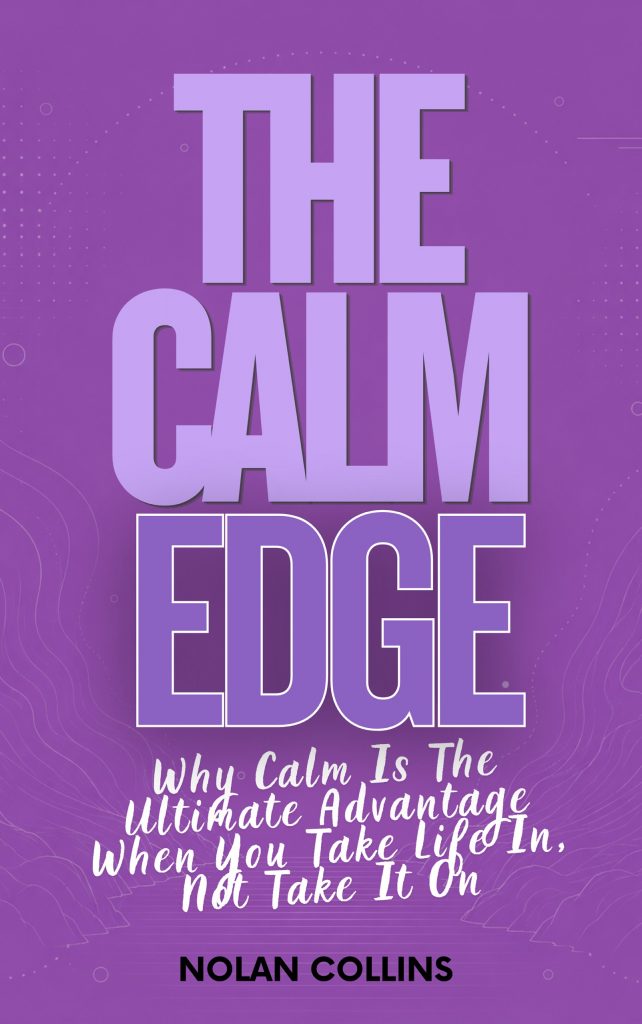
THE CALM EDGE TRILOGY – BOOK 2
Why calm is the ultimate advantage when you take life in, not take it on.
You have seen the person who stays clear when everyone else disappears into reaction. This book is about that state, where it comes from, and how to build it. Ebooks also available on Amazon.

You know what it looks like when someone has “it”. Here is what it actually feels like from the inside.
PARENTING
Your teenager comes home and goes straight to their room. You have had a full day. Part of you wants to follow immediately and push for answers. Part of you wants to leave it entirely. The old version of you would have done one or the other and got it wrong. Instead you wait twenty minutes, knock once, and say: I’m making tea. You don’t have to talk. An hour later they come downstairs and start talking. Not because you fixed anything. Because you stayed available without demanding access.
RELATIONSHIP
A conversation about something that has been building for weeks surfaces again tonight. You can feel the familiar pull to defend your position or go quiet. You can hear the version of yourself that wins the argument and loses the evening. Instead you ask yourself one question that changes your whole perspective in a split second. The conversation changes direction. Not because you gave up. Not because you gave in. Because you stopped trying to win it and started trying to understand it.
WORK
Your manager questions your approach in front of the team. The words are reasonable. The tone is not. You feel the heat in your chest before your thinking mind has caught up with what just happened. A year ago you would have responded defensively or stewed on it for two days. Instead you pause, respond to what was actually said rather than how it felt, and move on. Later your manager comes to you separately. The moment that would have ruined your week is over by lunch.
Fifteen chapters across three parts.
What the Calm Edge is, where it shows up, and how you get there.
Work and performance: staying clear under pressure when the stakes are real
Leadership and presence: being the person the room organises around
Relationships and partnership: staying yourself while someone else disappears into their patterns
Parenting: remaining available in the moments that matter most
Health and the body: what changes physically when the bracing finally stops. The body keeps the score!
Money: why financial decisions made from a reactive state rarely resemble the ones you would make from a clearer one
Hobbies, flow, and creative space: what becomes possible when the background noise settles
The path to the Calm Edge: practical, specific, and available to anyone willing to do the work
The calm person in the room has more.
More information, because they are not managing their own reaction while trying to think. More options, because they are not limited to whatever the reactive pattern is offering. More influence, because calm is as contagious as panic, and the person who does not flinch gives everyone else permission to think.
That is the Calm Edge. An edge. A genuine advantage. Not the absence of the wave, but the ability to let it move through you without becoming the thing steering your behaviour.
This is not about feeling less. The emotions stay. All of them. The goal is to feel accurately — to feel what the situation actually warrants, rather than what a stored pattern has decided it must warrant. That is a very different thing from being calm because you have stopped caring.
THE CALM EDGE BOOK TRILOGY