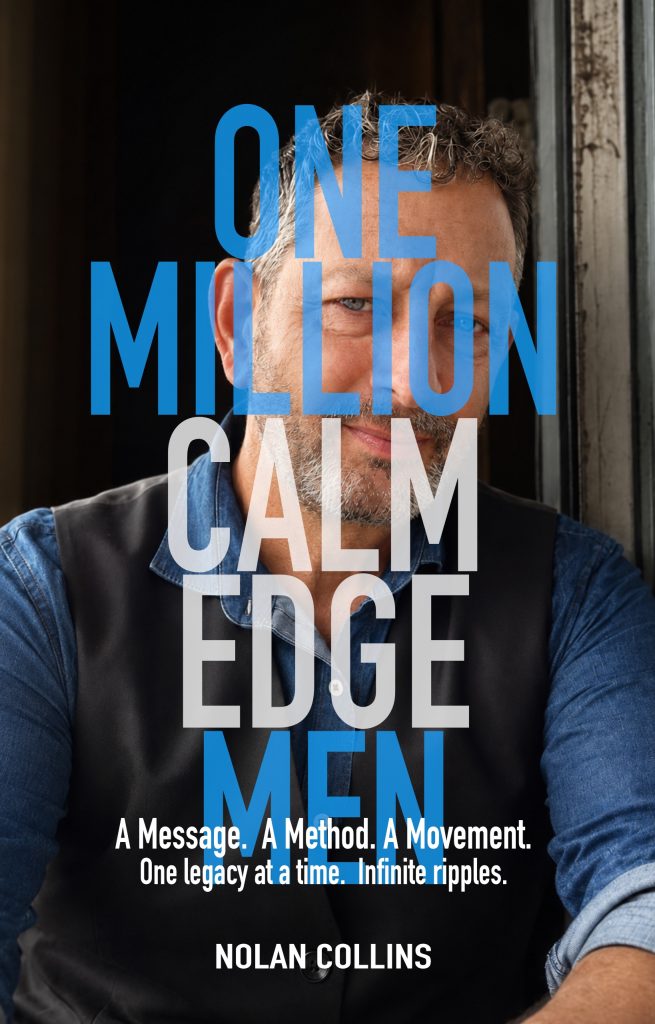
New for Men’s Mental Health Month — One Million Calm Edge Men is free* to anyone who needs it.

CALM EDGE TRAINING FOR COMPANIES AND TEAMS
Most behaviour and emotional regulation training teaches people what to do after the reactive pattern has already fired.
How to have the difficult conversation. How to repair the trust. How to communicate more openly with people whose guard is already up. How to tip-toe around the difficult people. You know who they are.
The problem is upstream of all of that.
This training goes there.
Not a sales call. A direct conversation about what is actually happening in your organisation.
THE COST OF UNTRAINED
85%
of employees experience some degree of workplace conflict
2.8 hr
per employee per week lost to interpersonal conflict, not work
$359Bn
annual cost to US employers from conflict-related lost productivity
77%
of employees disengaged as a direct result of unresolved conflict
72%
of organisations have no formal conflict resolution policy
Sources: CPP Inc., Gallup, Society for Human Resource Management
And if you think the situation is going to improve because someone was asked to “reflect on what they could do better” — without giving them any actual mechanism or understanding to do it differently at the implicit level— you already know what happens next.
They reflect. They agree. They feel judged rather than helped. They leave without giving an honest answer of why.
Or the same situation arrives and the same pattern fires, because reflection is not installation.
What follows is not improvement.
It is avoidance, resentment, and the same pattern waiting for the next trigger.
If that is what you are seeing, and will admit it, we need to talk.
Which five of the items below do you see most often?
Check what is actually present and what you suspect.
THE PERSON BEHIND THE FRAMEWORK
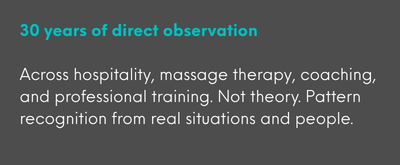
Thirty years of being IN the room.
I am not a clinician. I did not come up with this in a research lab. It comes from thirty years of working directly with people across hospitality, bodywork therapy, coaching, and professional training — the environments where the performance drops and the actual patterns become visible when people are under real pressure.
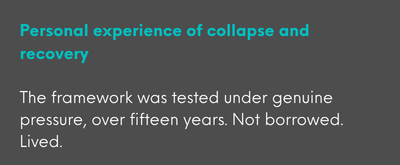
I have ADHD. My own business failed in my early thirties and took fifteen years to recover from. The frameworks I teach are the ones I needed and could not find when I needed them most. I will always be transparent about that.
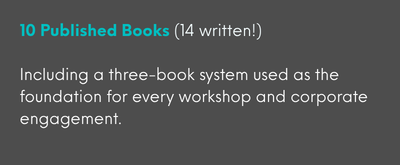
I have written The Calm Edge Trilogy as the complete architecture: the philosophical foundation, the vision for what is possible, and the practical installation framework. Every corporate workshop is built directly on this foundation.

WHY TRADITIONAL EI AND BEHAVIOURAL TRAINING OFTEN DOESN’T STICK
Most workplace training works downstream of the actual problem.
It teaches people how to manage the reaction after it has already run. How to have the difficult conversation after the damage is done. How to repair trust after it has broken. How to communicate more openly with people whose guard is already up.
The problem is upstream of all of that.
Every reactive pattern fires below conscious awareness, faster than thinking, from a system running old calibration in a current situation. The team member who becomes defensive under feedback is not choosing to be difficult. Their system has flagged a departure before their thinking mind has caught up.
Telling them to communicate more openly does not reach the place where the defensive response is generated. Neither does another workshop on active listening. Neither does a team charter. Neither does rewriting the values on the wall.
The pattern is not at the level of behaviour. It is at the level of the stored system driving the behaviour. That is where the work has to go.
This is where Calm Edge training is different.
“It is like endlessly mopping the floor while the tap is still running. This training goes to the tap.”
Nolan Collins
WHAT ACTUALLY CHANGES
Not atmosphere. Behaviour.
The Calm Edge framework applied in an organisational context produces specific, observable changes — measurably different behaviour under the pressure that previously broke things, and people. Not a better feeling in the room. Not a lot of nods and nothing else. A different room. A more self-aware room.
Leaders respond rather than react
People in positions of authority learn to identify which core state is driving a reaction — in themselves and in others — and respond to the actual driver rather than the visible behaviour.
Conflict becomes workable
Teams develop a shared language that removes the shame and personalisation keeping conflicts stuck. When everyone understands the mechanism, it stops being about character.
Performance holds under pressure
The people who previously became unavailable when stakes were high develop the ability to stay present and functional at precisely the moments the situation needs them.
The real reasons surface
When people are not managing reactive patterns alone, the actual issues driving disengagement, resistance, and attrition become visible rather than coded as personality problems.
A single practical filter
Every participant leaves with one question that cuts through noise faster than any policy: “Is this helpful, for who I am choosing to be, right now?” Deceptively simple & useful.
The framework compounds
Unlike a one-day event forgotten by Thursday, this builds with each application. Organisations that return to it will see continued improvement, not the the standard decay curve.
WHAT A CALM EDGE LEADER LOOKS LIKE
They create clarity in the places
where others create urgency.
They do not amplify panic. They do not personalise every problem. They do not make decisions from a pressured internal state and then build a rational case around them afterwards. When others are reacting, they are observing. When others are escalating, they are choosing. When others are defending, they are leading.
They create psychological safety without removing accountability. They remain available under pressure — which is precisely when availability matters most. The people around them do not walk on eggshells. They do not monitor the leader’s mood before deciding what to say.
That freedom is not accidental. It is the direct result of a leader who has done the internal work that most people defer indefinitely.
That is what this training develops.
THE FRAMEWORKS FOUNDATION
Three books. One system.
Every workshop is built on the Calm Edge Trilogy. Participants who want the full architecture can access all three ebooks for $7 each — a resource that reinforces the framework long after the training day ends.
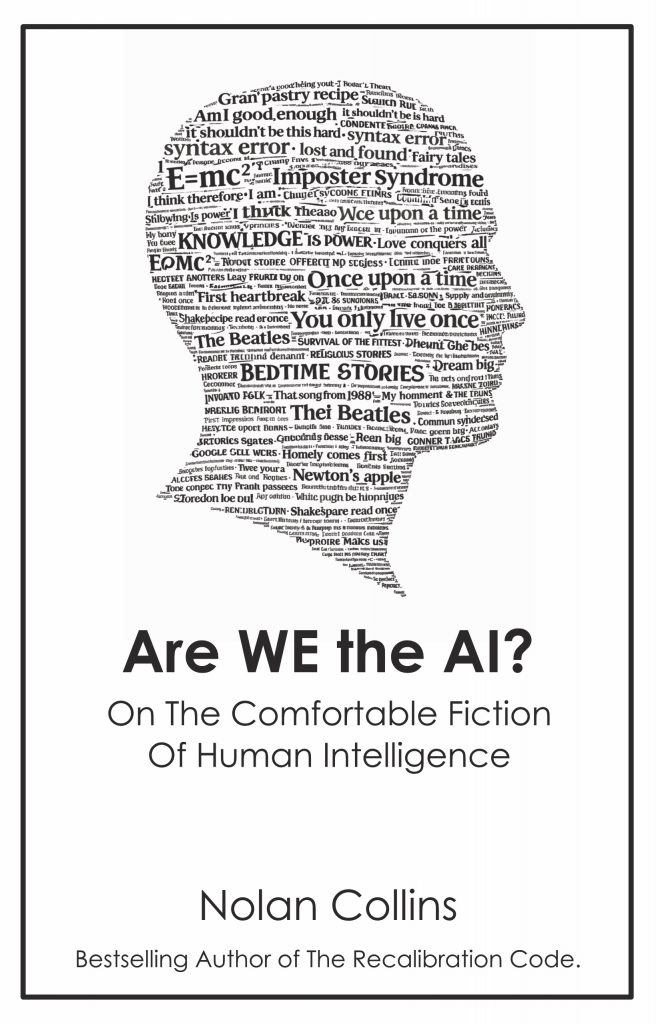
BOOK ONE
Are We The AI?
The philosophical foundation. Why human minds are pattern-matching systems that occasionally reason — not the other way around. Challenges the assumption that awareness alone creates change.
BOOK TWO
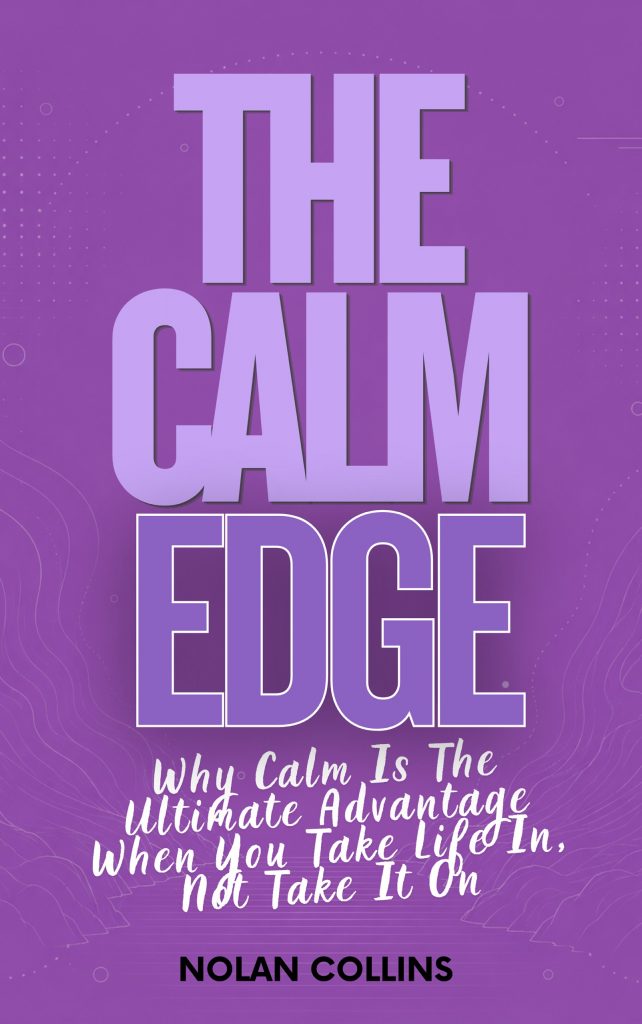
The Calm Edge
The destination. What leadership, relationships, performance, self, and decision-making look like when the reactive system is no longer running the show. The case for calm as competitive advantage.
BOOK THREE
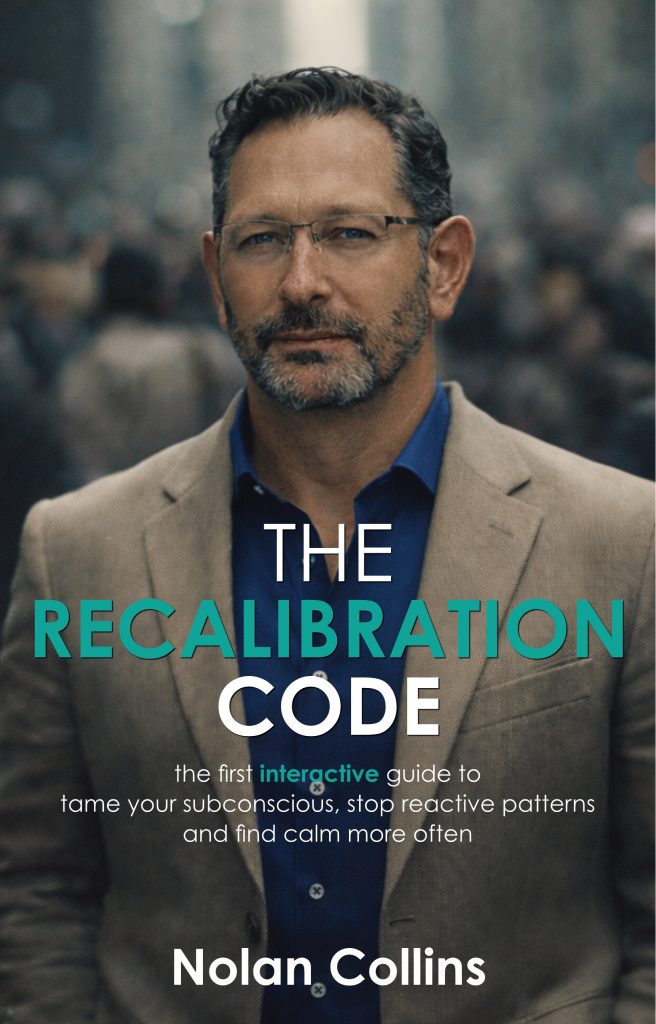
The Recalibration Code
The practical installation framework. How to identify the patterns costing most, understand the mechanism driving them, and retrain responses at the level where they actually live. No tests. No labels. Just training.
Each ebook is available for $7 — View the books
HOW WE WORK TOGETHER
Three formats. One framework.
All formats are preceded by a discovery conversation to understand what is actually showing up in your organisation. There is no generic delivery.
HALF DAY
Foundation Workshop
Three to four hours. Introduction to the Calm Edge framework — the four core states, the four reaction types, and practical application in team and leadership contexts. Up to 20 participants. A working introduction, not a taster session.
Contact for pricing →
FULL DAY
Complete Framework Delivery
Six to seven hours. The full framework: core states, reaction types, the Experience Loop, and the Instead Of protocol. Live application using real scenarios from your organisation. A custom guided session developed from the pre-workshop discovery call. Up to 25 participants.
Contact for pricing →
ONGOING SUPPORT
Built Into the Organisation
Monthly sessions, leadership coaching, and community access for key personnel. The framework embedded over time rather than delivered once. Compounding returns rather than the standard decay curve. Bespoke proposal based on your organisation’s specific situation.
Contact for a proposal →
Pricing is discussed on the discovery call and reflects the scope and scale of the engagement. The books and digital resources are priced separately and made available directly to participants. I also offer lunch and learn, team meeting and keynote talks.
START THE CONVERSATION
The conversation starts with
what is actually happening.
Not a sales call. A direct 20-minute conversation with Nolan about what is showing up in your organisation, what has already been tried, and whether this is the right fit. If it is not the right fit, he will say so.